
How to Get a Title for an Abandoned Vehicle
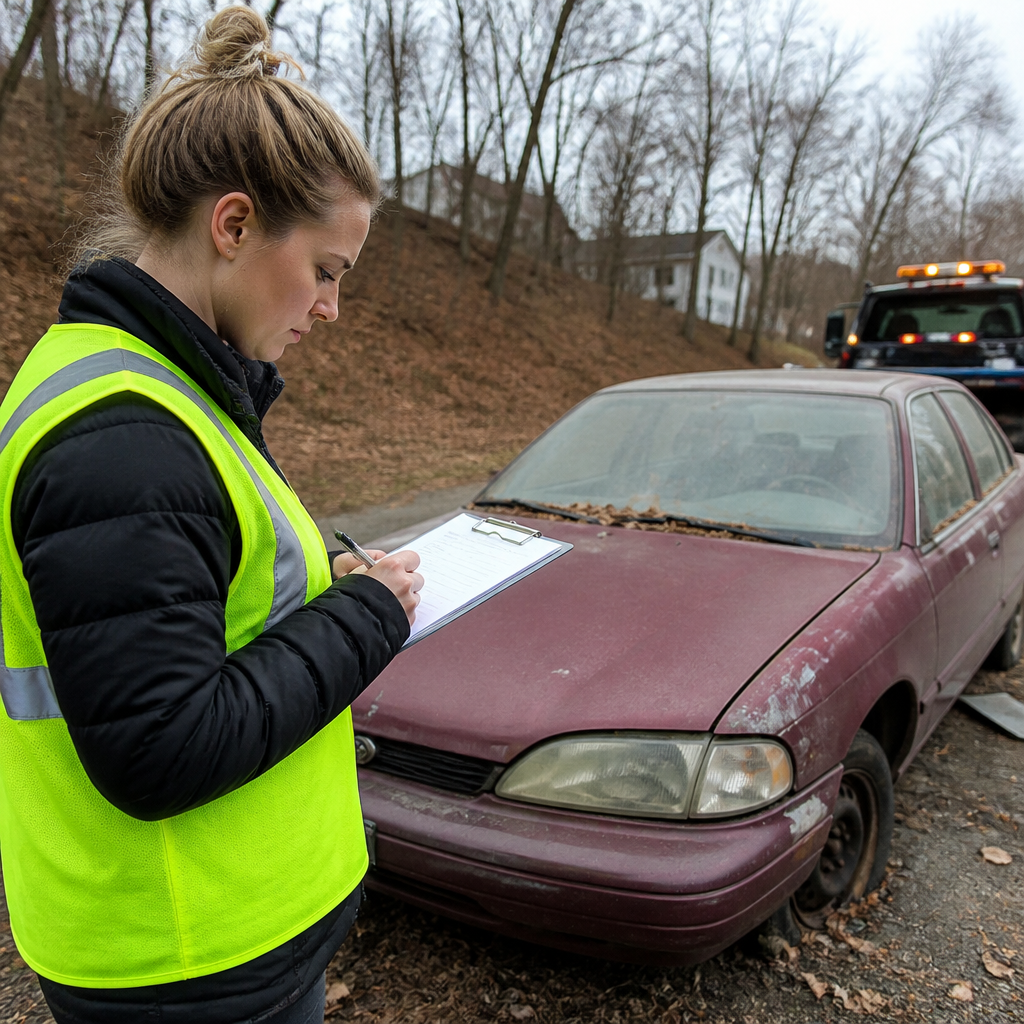
Getting a title for an abandoned vehicle starts with one core fact: you cannot legally claim ownership just because a car, truck, motorcycle, or trailer was left on your property. An abandoned vehicle title is issued only after you follow your state’s process for notice, records checks, lien handling, and ownership transfer. The exact forms differ by state, but the pattern is consistent nationwide: document the vehicle, determine whether it is truly abandoned under state law, notify the last known owner and lienholder, wait the required period, and apply for title using the correct agency procedure.
In this context, “abandoned vehicle” usually means a vehicle left unattended on public or private property for a statutory period without permission, payment, or retrieval by the owner. “Title” is the legal ownership document issued by a state motor vehicle agency. “Lienholder” means a lender or other party with a recorded security interest. These terms matter because each one changes the route you must take. A vehicle abandoned at a repair shop, for example, may be handled under mechanic’s lien rules, while a car left on private land may require a sheriff, police, towing, or motor vehicle division process.
This topic matters because abandoned vehicle cases create the exact paperwork problems that stop registrations cold: missing titles, dead owners, open liens, unreadable VINs, old state records, and broken chains of ownership. If you skip a notice, use the wrong form, or apply in the wrong state, the title can be denied even after weeks of effort. For a usable vehicle, the goal is not just ownership in theory. The goal is a clean, transferable title that can support registration, insurance, and future sale.
What counts as an abandoned vehicle and who decides
The direct answer is that state law decides whether a vehicle is abandoned, and the deciding agency may be a DMV, department of revenue, law enforcement office, court, towing regulator, or county tax office. Most states define abandonment by time and circumstance: a vehicle left on private property without consent, left at a repair facility after work is completed, left in storage after towing, or left on a public road and not moved within a stated number of hours or days. Local ordinances may add separate rules for nuisance vehicles, inoperable vehicles, or vehicles missing major parts.
Before doing anything else, record the VIN, plate number, make, model, location, and condition. Take date-stamped photographs from all sides, including the dashboard VIN if visible. Then check your state motor vehicle agency website and the local law enforcement page where the vehicle sits. Primary sources matter here because states handle abandonment differently. California uses abandoned vehicle and lien sale procedures through the Department of Motor Vehicles and local authorities. Texas publishes guidance through the Texas Department of Motor Vehicles. Florida addresses abandoned and unclaimed vehicles through the Department of Highway Safety and Motor Vehicles. Montana vehicle title rules are published by the Montana Department of Justice Motor Vehicle Division.
If the vehicle was towed, repaired, stored, or left at a business, do not assume the private-property process applies. Towing companies, storage lots, landlords, and repair shops often have separate statutory remedies with mandatory certified-mail notices and sale procedures. Using the wrong path is one of the most common reasons applications fail.
The standard abandoned vehicle title process
In plain terms, most abandoned vehicle title cases follow the same sequence even though form numbers change by state. First, identify the vehicle from the VIN. Second, request ownership and lien information through the authorized state process. Third, send notices to the titled owner and any lienholder. Fourth, wait the statutory response period. Fifth, if the owner does not reclaim the vehicle and the statute allows transfer, apply for title or complete an authorized sale. Some states issue title directly to the claimant; others require a public auction first, even if nobody bids.
| Step | What you do | Why it matters |
|---|---|---|
| 1. Verify status | Confirm the vehicle meets your state’s abandonment definition | A wrong classification can void the entire filing |
| 2. Inspect VIN | Record the full VIN and compare body, dash, and door labels if present | VIN errors are a leading cause of rejection |
| 3. Check records | Request owner and lien information from the proper agency | You must notify the correct parties |
| 4. Send notice | Mail required notices by certified or registered mail when required | Due process is mandatory before ownership can change |
| 5. Wait period | Hold the vehicle for the statutory response period | Early filing is commonly denied |
| 6. Transfer method | Apply for title directly or complete a required lien sale or auction | States do not all transfer ownership the same way |
| 7. Final title filing | Submit title application, notices, proof of mailing, and supporting documents | The file must prove every statutory step was completed |
Primary source agencies usually provide the needed forms and instructions. Start with your state DMV or title agency, then cross-check local police, county clerk, tax collector, or towing regulator pages if the vehicle is on private property, was towed, or sits at a shop. For national VIN history context, the National Motor Vehicle Title Information System helps participating users identify state title brands and history, but it does not replace a state ownership record request. For theft screening, law enforcement databases and NICB VINCheck can be useful starting points, though official state and police procedures control the outcome.
Documents you usually need and the issues that change the answer
Most successful abandoned vehicle title files include the same core records: a title application, an abandoned vehicle report or affidavit, VIN inspection if required, proof of mailing to the owner and lienholder, returned envelopes if undeliverable, photographs, tow or storage invoices if relevant, property authorization if the vehicle was removed from private land, and any sale paperwork required by statute. If the vehicle came through a repair or storage situation, you may also need signed work orders, storage agreements, or itemized charges.
The answer changes when one of five complications appears. First, an active lien can block a direct title transfer and force a lien-sale process or lender release. Second, an out-of-state record often adds an extra notice step because the last title state controls part of the ownership history. Third, a missing or altered VIN can stop everything until law enforcement or a state inspector determines identity. Fourth, vehicles with salvage, junk, or parts-only branding may not be eligible for standard registration even if ownership transfers. Fifth, some vehicles are exempt from title in certain states by age, type, or weight, meaning you may need registration records, a court order, or a bonded title instead of a conventional title.
Bonded title rules matter because people often confuse them with abandoned vehicle procedures. A bonded title is generally used when you possess a vehicle but cannot prove ownership with standard documents. It is not a shortcut around notice requirements for a known abandoned vehicle. Courts also sometimes become necessary, especially when records are contradictory, the owner is deceased, or a chain of transfers was never completed.
State differences, practical mistakes, and when handled paperwork helps
No national abandoned vehicle title form exists. States vary on waiting periods, mailing rules, publication rules, inspections, and whether a private claimant can apply directly. Some require certified mail only; others accept additional notice methods. Some require a public sale. Others route everything through law enforcement first. That is why the safest workflow is to build your file from current primary sources rather than copied forum advice. Use the official state pages for forms and deadlines, including DMV, department of revenue, department of transportation, or department of justice sites, and check any county rules where the vehicle is located.
The most expensive mistakes are simple. People submit an application before the notice period expires, mail notices to an outdated address without using the agency record request, omit a lienholder, rely on a bill of sale alone, or spend money on repairs before legal ownership is secured. Another frequent problem is trying to register a vehicle before the title problem is actually solved. Registration options depend on having a usable ownership document and a vehicle status that qualifies for road use. If the title chain is broken, registration is not the first step; title cleanup is.
That is where a file review helps. We look at whether you have a usable title path, whether the vehicle record suggests abandoned-vehicle procedure, bonded title, court correction, estate paperwork, lien release, or another route, and whether Montana registration or Montana LLC titling is appropriate for a legally supportable case. That does not override your home-state tax, residency, garaging, insurance, lender, emissions, or registration rules, and it is not the answer for every vehicle. It is simply one option when the paperwork supports it.
The main takeaway is straightforward: getting a title for an abandoned vehicle is a documentation process, not a possession process. You need the correct state procedure, complete notice records, and a final application package that proves every step. Start with the state agency where the vehicle is located, confirm whether abandonment, lien sale, bonded title, or court action applies, and do not repair or register the vehicle until ownership is legally established. If you already have a usable title document and need registration options, review the next steps for registration. If your title chain is broken, the record is unusual, or the vehicle was left behind without transferable paperwork, request a file review or retitling help so the paperwork is handled in the right order.
Frequently Asked Questions
Can I legally get a title to a vehicle that was left on my property?
Yes, but only if you follow your state’s abandoned vehicle process from start to finish. Simply finding a car, truck, motorcycle, or trailer on your property does not automatically give you ownership rights. In every state, an abandoned vehicle title is issued through a legal procedure that usually includes confirming the vehicle’s status, checking registration and title records, identifying any lienholders, sending required notices, waiting through mandatory response periods, and applying for a new title through the correct agency.
The most important point is that abandonment is a legal classification, not just a practical inconvenience. A vehicle may feel abandoned because it has been sitting for weeks or months, but state law decides whether it qualifies. Some states define abandonment by the amount of time the vehicle has been left unattended, while others also consider whether it was left without permission, whether it is inoperable, or whether storage or towing charges have accrued. If you skip any required step, your title application can be denied, and in some situations you could even face legal disputes from the prior owner or lienholder.
To protect yourself, start by documenting the vehicle thoroughly, including photos, the VIN, plate number if present, the date it appeared or was left behind, and any communications with the person who left it there. Then contact your state motor vehicle agency, local law enforcement, or a licensed towing or storage authority if your state routes abandoned vehicle claims through those channels. Following the official process is what turns an abandoned vehicle from a private problem into a transferable title matter.
What steps are usually required to get an abandoned vehicle title?
While the exact forms and agency names vary by state, the overall process is remarkably similar across the country. First, you document the vehicle and gather identifying information such as the VIN, make, model, year, location, and condition. Next, you determine whether the vehicle legally meets your state’s definition of abandoned. That usually requires checking how long it has been left there and whether it was left without permission or without payment for storage, repairs, or towing.
After that, there is usually a records search. This step helps identify the titled owner, any lienholders, and sometimes prior registration details. In many states, this is handled by the DMV, title bureau, secretary of state, or law enforcement. Once the owner and lienholder information is located, you are generally required to send formal written notice by certified mail or another approved method. The notice usually tells the parties where the vehicle is located, why it is considered abandoned, what fees may be due, and the deadline to reclaim it.
If no one responds within the required time, the next phase may involve a public sale, sheriff’s authorization, inspection, bonded title application, or direct title transfer depending on state law and the type of claimant. Some states allow property owners or storage facilities to apply directly for title, while others require the vehicle to be sold at auction before a title can be issued to the buyer. You may also need to complete odometer disclosures, VIN inspections, lien release documentation, publication notices, or affidavits.
At the end of the process, you submit the title application along with all supporting records, notices, receipts, and proof that deadlines were observed. If the paperwork is complete and the state is satisfied that all legal requirements were met, a new title may be issued. Because even small errors can delay approval, it is wise to verify every step with your state agency before spending money on repairs or assuming you will become the owner.
How do I find the owner or lienholder of an abandoned vehicle?
The normal way to identify the owner or lienholder is through a vehicle records search based on the VIN or license plate. In most states, private individuals cannot always access full motor vehicle records directly, but the state may provide owner and lienholder information through an abandoned vehicle procedure, law enforcement request, towing lien process, or title records application. The agency involved is often the DMV, department of revenue, secretary of state, highway patrol, or local police department.
You should begin by locating the VIN, which is usually visible on the dashboard near the windshield, on the driver-side door jamb, or on the frame for motorcycles and trailers. Write it down carefully and photograph it. If the VIN is missing, altered, or unreadable, stop and contact law enforcement or the state title agency immediately. A missing or tampered VIN can turn the matter into a theft or fraud issue, and no legitimate title transfer should proceed until that is resolved.
Once a records search is completed, the state or authorized party will identify the last known owner and any lienholders with a legal interest in the vehicle. A lienholder matters because even if the owner appears to have walked away from the vehicle, a bank or finance company may still have a valid claim. That is why notice requirements usually apply to both the owner and every recorded lienholder. If you fail to notify one of them properly, the title transfer can be challenged later.
In some states, if certified mail is returned undeliverable, you may still be required to keep proof of the mailing attempt and proceed with additional notice steps such as publication in a local newspaper or posting notice publicly. The key is not just trying to find the owner, but creating a clear paper trail showing that you used the legally required method to do so. That record is often as important as the search result itself.
What documents and evidence should I keep during the abandoned vehicle title process?
You should keep everything. The stronger your documentation, the better your chances of a smooth title transfer. At a minimum, save photographs of the vehicle from multiple angles, close-up images of the VIN and license plate, notes showing when and where the vehicle was found or left, and any messages, emails, lease records, repair orders, towing invoices, or storage agreements connected to it. If the vehicle was left by a tenant, customer, guest, or former owner of the property, preserve records that show the relationship and the timeline.
You should also keep copies of every form you submit and every notice you send. That includes certified mail receipts, return receipts, envelopes returned as undeliverable, publication affidavits, law enforcement reports, vehicle inspection forms, lien search results, auction notices, sale records, and any payment receipts for administrative fees. If your state requires waiting periods, note the exact start and end dates so you can show that you did not move too early in the process.
This documentation serves two purposes. First, it helps the state decide whether you met the legal requirements for an abandoned vehicle title. Second, it protects you if the former owner or a lienholder later claims they were not notified or says the vehicle was not actually abandoned. A complete paper trail can make the difference between a routine approval and a disputed application.
It is also smart to organize your records in chronological order. That way, if a DMV clerk, hearing officer, or title examiner asks what happened and when, you can show the full sequence clearly: vehicle discovered, status verified, records search requested, notices mailed, deadlines expired, additional publication completed if required, and title application submitted. In abandoned vehicle cases, organization is not just helpful; it is often essential.
What are the most common mistakes people make when trying to get a title for an abandoned vehicle?
The biggest mistake is assuming possession equals ownership. Many people think that if a vehicle has been left on private property long enough, they can simply file for a title. That is not how abandoned vehicle laws work. States require a formal process because the titled owner and any lienholders still have legal rights until those rights are properly addressed. Skipping the process can lead to a denied application, civil disputes, or an inability to register or sell the vehicle later.
Another common mistake is starting repairs or investing money too early. It is tempting to fix up a vehicle that seems valuable, but until the title issue is resolved, you may not legally own it. If the owner reappears or a lienholder claims it, you may not recover what you spent. It is usually better to wait until the state confirms the transfer path and, ideally, until the title is actually issued.
People also run into trouble by failing to send notices correctly. Using ordinary mail when certified mail is required, sending notice to the wrong address, missing a lienholder, or not waiting the full statutory period are all common reasons an abandoned vehicle title application gets rejected. The same is true when applicants fail to document the VIN accurately, overlook local towing and storage rules, or misunderstand whether an auction is required before title can pass.
Finally, many applicants rely on general advice instead of state-specific instructions. Because the broad process is similar nationwide, it is easy to assume the details are interchangeable. They are not. Deadlines, forms, fees, agency involvement, and auction rules can differ significantly from one state to another. The safest approach is to confirm the exact procedure with your state motor vehicle agency and, if needed, a local attorney, title service, or licensed towing/storage professional familiar with abandoned vehicle law in your area.