How to Register and Title a Imported JDM Car in Montana
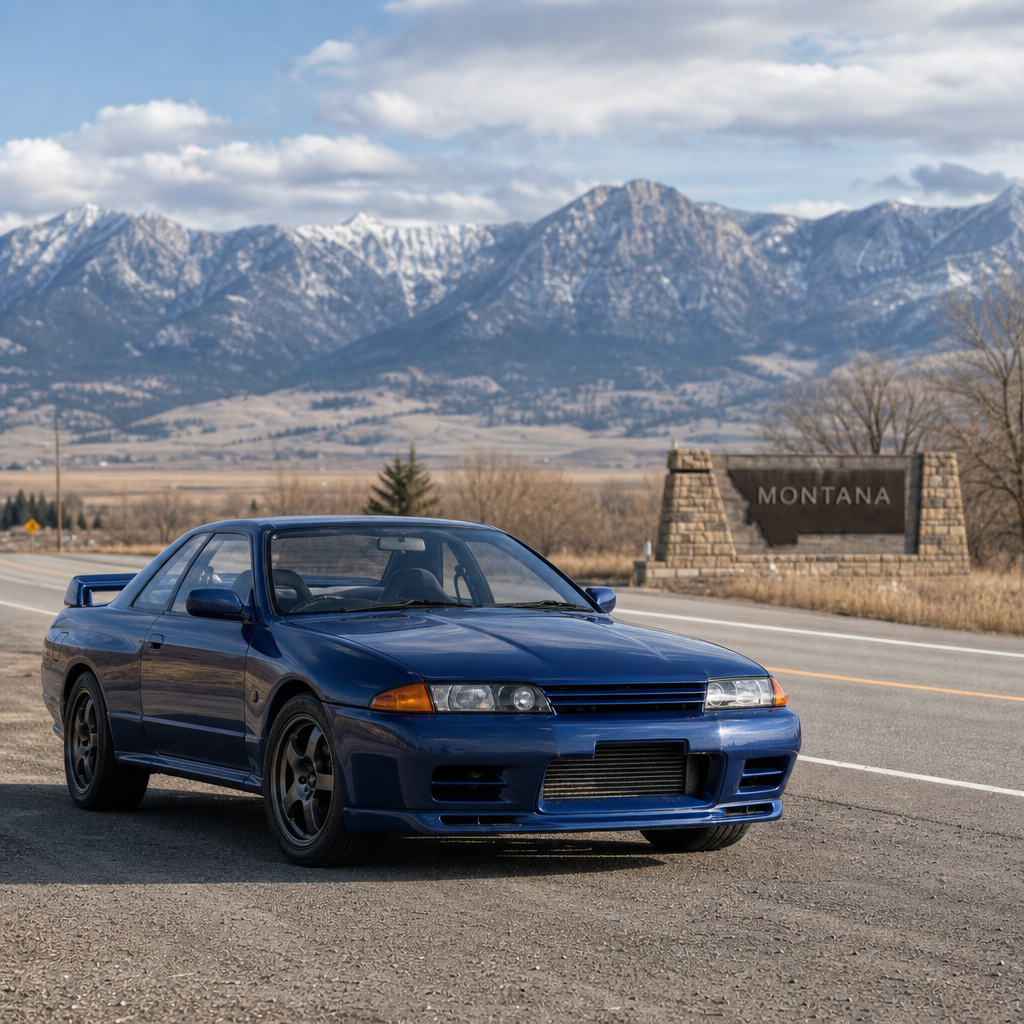
Registering and titling an imported JDM car in Montana means creating a lawful paper trail that satisfies federal import rules, Montana ownership requirements, and county registration procedures. For many owners, the appeal is simple: lower tax exposure, simpler processing, and a practical way to title right-hand-drive vehicles that often confuse local DMV staff.
JDM stands for Japanese Domestic Market, a term commonly used for vehicles originally built for sale in Japan, such as a Nissan Skyline GT-R, Suzuki Carry kei truck, Toyota HiAce, or Honda Beat. In practice, buyers also use JDM to describe any Japanese-import vehicle, even when the exact model was sold elsewhere. That distinction matters because Montana title work depends less on enthusiast slang and more on whether the vehicle was legally imported, how old it is, what paperwork came with it, and whether the VIN format matches U.S. systems.
I have worked through imported title files where the buyer had a clean auction invoice, foreign deregistration papers, and a shipper packet, yet still could not register the vehicle at home because the clerk wanted a 17-character VIN or could not interpret Customs forms. That is exactly why Montana has become a serious option for collectors, RV buyers, and imported vehicle owners. The state processes unusual vehicles every day, and the Montana LLC method gives non-residents a recognized legal structure for ownership and registration.
This matters most for buyers trying to avoid expensive home-state sales tax, skip the DMV line, or solve paperwork problems before a vehicle becomes impossible to use or insure. It also matters because internet advice is often sloppy. People call Montana a loophole, or they warn of a crackdown, without explaining the real legal checkpoints. The plain answer is this: a Montana title is only as strong as the import documents behind it. If the vehicle entered the country lawfully and the ownership chain is complete, Montana can be one of the cleanest paths to registration.
Reviewed by Legal Tags registration specialists, this guide explains the core rules, the documents you need, common roadblocks, and where owners usually get stuck. It also serves as a hub for related cases like bonded title situations, missing Manufacturer’s Statement of Origin issues, retitling odd vehicles, and problem files involving deceased owners or vanished liens.
What Montana Requires for an Imported JDM Car
To title an imported JDM car in Montana, you generally need proof of ownership, proof of legal entry into the United States, and enough vehicle detail for the county to create a title record. The most important federal documents are typically CBP Form 7501, EPA Form 3520-1, and DOT Form HS-7. These forms show how the vehicle was admitted and under what exemption or compliance category. If those documents are missing, title work can stall fast.
For most classic imports, the key threshold is age. Under NHTSA rules, a motor vehicle that is at least 25 years old can be imported without meeting Federal Motor Vehicle Safety Standards. EPA has a similar 21-year rule for emissions exemption if the vehicle is in original configuration. Those are federal import standards, not Montana title shortcuts, but they shape everything that follows. A 1998 Nissan Stagea may qualify today under the 25-year rule, while a newer model generally cannot be casually imported for road use without a Registered Importer path.
Montana counties also need ownership evidence. That can include a Japanese export certificate with translation, foreign registration, bill of sale, auction sheet, or prior U.S. title if the vehicle was already titled here. If the importer or dealer failed to pass along the Customs packet, the buyer may own the car physically but still lack the legal record needed for retitling. NMVTIS checks, VIN inspections where required, and county review all depend on a complete file.
The Montana LLC Method and Why Buyers Use It
The Montana LLC method is a legal ownership structure where a Montana limited liability company holds title to the vehicle, and the LLC registers the vehicle in Montana. Non-residents use it because Montana has no general statewide sales tax, allows vehicle ownership through business entities, and regularly handles high-value, specialty, and collector registrations. For imported JDM car owners, that often means fewer dead ends than they face in their home state.
In real files, the benefits are practical, not theoretical. A California or New Jersey buyer may face aggressive tax collection, emissions barriers, or local confusion over imported paperwork. A retiree buying a Toyota Land Cruiser Prado or a collector purchasing a right-hand-drive Mitsubishi Pajero may simply want correct registration without arguing with a counter clerk who has never seen a Japanese export certificate. The Montana process does not erase federal law or local use rules, but it can provide a valid title and registration path where the import itself is legal.
Legal Tags focuses on this exact workflow: free LLC setup, registered agent service, and document handling built around unusual vehicles. That is especially useful when a file has inconsistencies, such as a bill of sale that abbreviates the chassis code differently than the Customs entry. Those details sound minor, but title records break over small mismatches.
Documents You Should Gather Before Starting
Most imported JDM title delays come from missing paperwork, not from the vehicle itself. Before filing, gather every ownership and import document you have, then verify names, dates, and VIN or chassis numbers match throughout the file. Imported vehicles often use short VINs or frame numbers, and Montana can process them, but only if the supporting documents are consistent.
| Document | Why it matters | Common problem |
|---|---|---|
| Bill of sale | Shows transfer of ownership and purchase price | Name or chassis number does not match import packet |
| Japanese export certificate or foreign registration | Establishes prior title history | No translation or partial copy only |
| CBP Form 7501 | Proves legal Customs entry | Lost by broker, dealer, or prior owner |
| EPA Form 3520-1 | Shows emissions exemption or compliance basis | Vehicle description incomplete |
| DOT Form HS-7 | Shows safety compliance or 25-year exemption | Wrong import category checked |
| Prior U.S. title, if any | Simplifies retitling if already domesticated | Title branding or assignment errors |
If you are buying from an importer, ask for the full packet before money changes hands. If you already bought the car and the packet is incomplete, fix that first. No service can manufacture lawful import history after the fact.
Step-by-Step Process for Titling and Registering
First, confirm the car was legally imported. That means reviewing the federal entry documents and verifying the vehicle qualifies under the correct age or compliance standard. Second, establish ownership by matching the seller’s documents to the import record. Third, form the Montana LLC if you are registering as a non-resident through the Montana LLC method. Fourth, prepare the Montana title application and supporting documents for county submission.
Fifth, address any inspection or verification requirement tied to the file. Some imported vehicles need additional VIN verification because the number format does not fit standard U.S. decoding. Sixth, calculate registration class, fees, and whether permanent registration is available based on age and vehicle type under Montana rules. Seventh, submit the packet accurately the first time. In my experience, imported files succeed when the packet tells a clean story from Japan to port to current owner without gaps.
After approval, the county issues title and registration documents to the Montana owner, which is typically the LLC. From there, owners handle insurance and lawful road use in their actual state of operation. That last part is where honesty matters: a Montana registration does not override another state’s residency enforcement, garaging rules, or insurance requirements. Buyers should verify local use exposure before assuming they can drive indefinitely without home-state scrutiny.
Common Problems: Missing Papers, Bonded Title, and Complex Retitling
The hardest imported JDM cases usually involve broken paperwork chains. A car may arrive with no CBP 7501, a mistranslated export certificate, or a seller who never properly titled the vehicle after import. Some owners also inherit imported cars from relatives, buy them from estates, or discover an old lien that was never released because the lender went out of business. Those are not rare edge cases. They are weekly title problems.
A bonded title may help in some ownership disputes or missing-title scenarios, but it is not a cure for unlawful importation. If federal entry documents never existed, a bond does not replace them. Likewise, a Manufacturer’s Statement of Origin usually applies to new vehicles and certain off-road or trailer situations, not to a used Japanese domestic vehicle imported through a port. Knowing which tool fits which problem matters. Retitling after a deceased owner, fixing assignment errors, or clearing a dead lien requires a different strategy than replacing a missing state title.
This is also where specialist help earns its value. If someone died and the vehicle is not in your name, you are not getting a title by guessing through forms. Legal Tags handles these problem files because ordinary DMV counters usually do not.
Insurance, Compliance, and Long-Term Practical Reality
Getting a Montana title is only part of owning an imported JDM car. You also need insurance that understands right-hand-drive vehicles, agreed-value collector coverage where appropriate, and a realistic plan for repairs, appraisals, and future resale. Carriers such as Hagerty, Grundy, and some mainstream insurers may write imported classics, but underwriting varies by state, garaging, mileage, and vehicle use. A kei truck used around a ranch presents a different risk profile than a Skyline driven weekly.
Owners should also keep a permanent copy of every import and title document. Future buyers, insurers, and even county clerks may ask for them again. If laws, form numbers, or fees change, verify the current requirements with the Montana Motor Vehicle Division, county offices, NHTSA, EPA, and CBP. Rules evolve, especially around imported specialty vehicles. The best protection is a complete, orderly file.
Montana can be an excellent registration path for legally imported JDM cars because it combines workable procedures, no statewide sales tax, and familiarity with unusual vehicles. The winning formula is simple: prove lawful import, prove ownership, submit a clean file, and use the right structure from the start. If your paperwork is messy, or you want to skip the DMV line and avoid preventable mistakes, talk to Legal Tags before you file.
Frequently Asked Questions
What documents do I need to register and title an imported JDM car in Montana?
To register and title an imported JDM car in Montana, you generally need enough paperwork to prove three things: the vehicle was lawfully imported into the United States, you legally own it, and the vehicle can be identified clearly for state records. In most cases, that includes the foreign title or export certificate from Japan, a bill of sale, the stamped federal import documents, and a completed Montana title application. The most important federal forms are usually CBP Form 7501 showing customs entry, EPA Form 3520-1, and DOT Form HS-7. These forms help establish that the car entered the country through the proper channels and qualifies for import under the correct exemption or compliance pathway.
Montana may also require a VIN inspection or vehicle identification verification, especially when the car has never been titled in a U.S. state before. Because many JDM vehicles use chassis numbers rather than the 17-digit VIN format common in the United States, accuracy matters. The title application must match the import paperwork exactly, including year, make, model, and chassis number. If there is any inconsistency between the customs documents and the ownership papers, that can delay processing.
Depending on the county and how the ownership transfer is structured, you may also need proof of insurance, odometer disclosures when applicable, and any supporting affidavits requested by the county treasurer’s office. If a Montana LLC is being used to hold title, additional business formation documents may be required. The safest approach is to treat the file like a chain of custody: every document should connect cleanly from the vehicle’s origin in Japan to its customs entry in the U.S. to the final Montana title application.
Can I legally title a right-hand-drive Japanese import in Montana?
Yes, in many cases you can legally title a right-hand-drive Japanese import in Montana, but the key issue is not the steering wheel position by itself. Right-hand drive is not automatically illegal. What matters is whether the vehicle was imported lawfully and whether the paperwork supports titling it under Montana law. A common example is a 25-year-old Japanese vehicle imported under the federal age-based exemption. If it was brought into the United States properly and the documents are in order, Montana can often title it even if local offices in other states would be unfamiliar with the process.
This is one reason Montana is popular with JDM owners. Many county offices are more accustomed to dealing with specialty, collector, and out-of-state-owned vehicles than a typical local DMV clerk elsewhere. That does not mean Montana ignores the rules. It means the state process can be more practical when the file is complete and the car qualifies under federal import law. A Nissan Skyline, Toyota Chaser, Suzuki Cappuccino, or similar Japanese-market vehicle may be eligible, but eligibility depends on how it entered the country and whether its identifying information is consistent across all forms.
Owners should still understand the difference between titling and road legality. A Montana title proves ownership and allows registration, but use on public roads may still depend on insurance, equipment condition, and how another state treats an out-of-state registration if the owner does not actually use the vehicle in Montana. In short, right-hand drive alone is usually not the problem. The real issue is legal import status, document consistency, and compliance with the registration process.
Why do people use Montana for registering and titling imported JDM cars?
Montana is attractive for imported JDM car registration because it can offer lower tax exposure, straightforward titling procedures, and a more workable path for unusual vehicles that often create confusion in other states. Montana does not impose a general statewide sales tax, which can significantly reduce upfront cost compared with states that charge sales or use tax on vehicle purchases. For higher-value imports, that difference can be substantial. Owners also often find that Montana’s registration framework is more familiar with collector vehicles, specialty imports, and nonstandard vehicle records.
Another major reason is administrative simplicity. Imported JDM cars often come with foreign ownership documents, nonstandard chassis numbers, and federal import forms that many local DMV offices outside Montana do not see often. That unfamiliarity can lead to delays, incorrect rejections, or requests for documents that do not apply. Montana’s county-based system can be easier to navigate when the file is prepared correctly, especially if the owner works with a professional service that understands imported vehicle paperwork.
Some owners also use a Montana LLC to hold title. That structure can be useful in certain cases, particularly for nonresidents seeking a lawful Montana ownership connection, but it is not a loophole that overrides other states’ laws. If the vehicle is actually garaged, driven, or principally used in another state, that state may still have registration, tax, or insurance rules that apply. So while Montana can be a practical and legitimate option for titling an imported JDM car, the best results come from using it as part of a compliant, well-documented strategy rather than as a shortcut.
How does the 25-year import rule affect titling a JDM car in Montana?
The 25-year rule is one of the most important factors in the entire process. Under federal law, a vehicle that is at least 25 years old can often be imported without having to meet all current U.S. Federal Motor Vehicle Safety Standards, which is why many classic Japanese cars enter the country through that exemption. For Montana titling purposes, this matters because the state generally relies on the fact that the vehicle was legally admitted into the United States. If customs and federal agencies accepted the import under the proper exemption, that creates the foundation for state title work.
That said, owners should be careful not to oversimplify the rule. The 25-year threshold is tied to the vehicle’s date of manufacture, not just the model year casually listed in a sales ad. A mistake here can cause serious problems. If a car was imported too early or under the wrong classification, Montana title processing may stall because the import paperwork itself is defective. This is especially important with popular vehicles like the Nissan Skyline, where trim levels and production dates matter and where buyers sometimes rely on incomplete seller information.
The EPA side also has its own age-based considerations, often tied to a 21-year exemption for emissions in certain situations, but the key practical point is this: Montana is not the place where import legality gets fixed. The vehicle must already have been imported correctly at the federal level. Once that piece is secure, Montana can be an efficient state for creating a valid title and registration record. If the federal paperwork is wrong, incomplete, or inconsistent, no county office can make that problem disappear.
What are the most common mistakes when titling an imported JDM car in Montana?
The most common mistakes are paperwork inconsistencies, misunderstanding federal import eligibility, and assuming Montana registration cures problems that started earlier in the process. A very frequent issue is mismatch between the Japanese export certificate, bill of sale, customs entry form, and title application. Even a small variation in chassis number formatting, model description, or ownership name can trigger delays. JDM vehicles often do not fit neatly into U.S. database conventions, so attention to detail matters more than with a typical domestic car.
Another common mistake is confusing possession of the car with proof of lawful import. Buyers sometimes receive a vehicle and a few sale documents and assume that is enough to title it. It is not. Without proper customs documentation and the relevant EPA and DOT forms, the state file may be incomplete or unusable. Similarly, some owners assume every Japanese car is automatically legal once it turns 25 years old, but the vehicle still must have been imported through the correct process and documented properly at the border.
People also run into trouble by failing to think beyond the title itself. Insurance can be more specialized for imported right-hand-drive cars, VIN inspections may require extra care because of chassis-number formats, and home-state enforcement can become an issue if the vehicle is primarily used outside Montana. Finally, many problems come from trying to force the process through a clerk who rarely handles imported vehicles without providing a complete, organized submission packet. The best way to avoid mistakes is to prepare a clean document trail from Japan to customs to Montana, verify the vehicle’s age and import basis before filing, and address state-specific use and insurance issues before the car goes on the road.