MSO vs Title: Is a Certificate of Origin the Same as a Title?
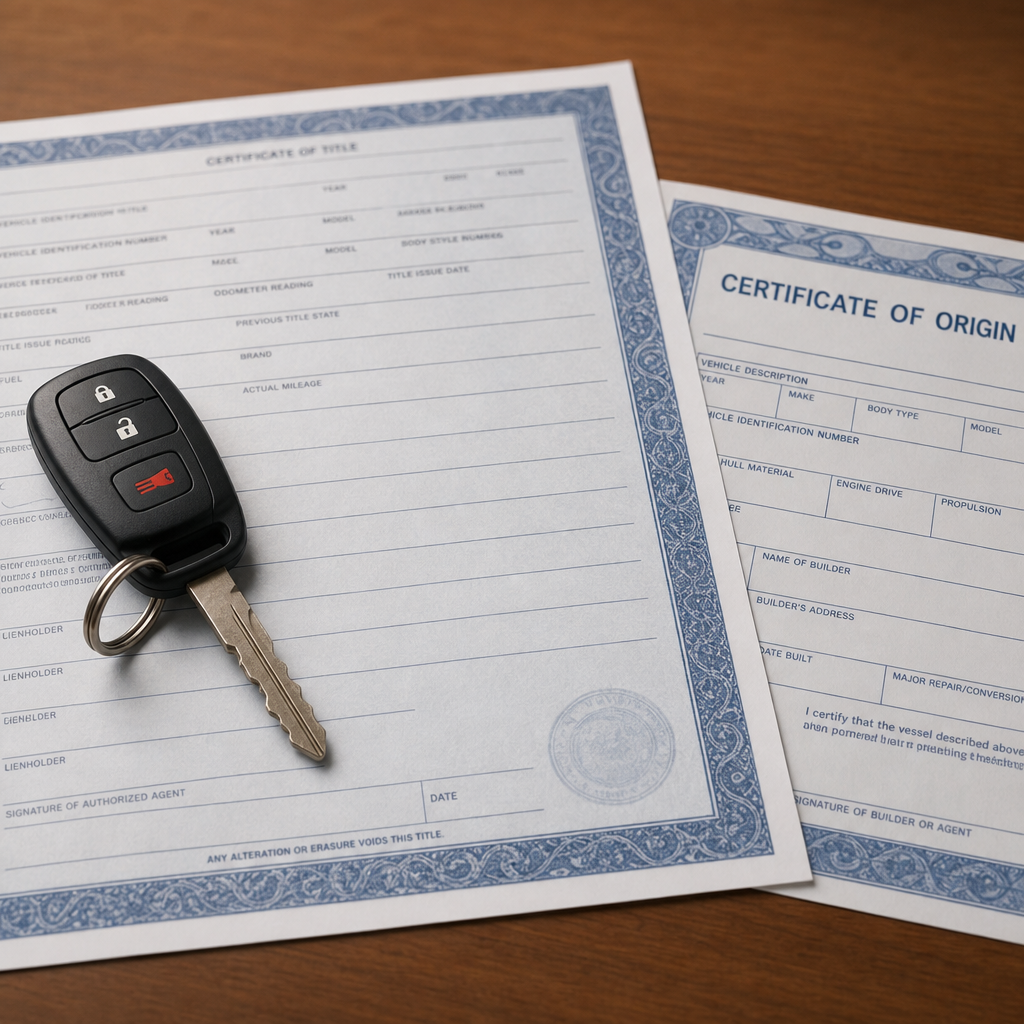
A Manufacturer’s Statement of Origin is not the same as a title. An MSO proves a new vehicle came from the manufacturer and has not been titled before, while a title is the state-issued ownership document used after the first retail sale. Knowing the difference matters because the wrong document can stop registration, financing, resale, or retitling.
If you are buying a new trailer, importing a motorcycle, fixing a paperwork problem, or trying to skip the DMV line with less frustration, understanding MSO vs title saves time and expensive mistakes. I deal with title files where the owner says, “I have the original paperwork, so why can’t I register it?” In many of those cases, the document in hand is an MSO, not a negotiable title, and the state wants a completely different paper trail.
This matters most for buyers of RVs, motorhomes, side-by-sides, custom trailers, kit cars, and collector vehicles that sat for years before first registration. It also matters when a lender, dealer, estate, or transporter lost a key document. In plain terms, an MSO starts a vehicle’s legal identity in commerce; a certificate of title records legal ownership once a state accepts the vehicle into its titling system. Those are related functions, but they are not interchangeable.
Reviewed by Legal Tags registration specialists, this guide explains what an MSO is, what a title is, when each document is used, how states treat them, and what to do if your paperwork is missing. Because state rules change, always verify current form numbers, taxes, and fees with the relevant motor vehicle agency.
What an MSO does and what a title does
An MSO, often called an MCO for Manufacturer’s Certificate of Origin, is created by the manufacturer for a new vehicle. It identifies the make, model, year, vehicle identification number, shipping weight, and sometimes body type or engine details. The first dealer receives it, then transfers it to the retail buyer or lienholder when the vehicle is sold. The MSO proves origin, not state-titled ownership.
A title is issued by a state agency such as a DMV, MVD, or county title office after an ownership application is approved. It names the legal owner and, when applicable, the lienholder. It becomes the main proof used to sell, gift, inherit, or refinance the vehicle. Titles may also carry brands such as salvage, rebuilt, flood, or odometer exemptions, depending on state law and vehicle age.
The key practical distinction is timing. Before the first title is created, the vehicle may exist only on an MSO. After the first state title is issued, the MSO has usually served its purpose. You do not normally use an MSO to transfer a used vehicle from one private owner to another. You use the current title, assigned correctly, with odometer and lien information where required.
When you will see an MSO instead of a title
You usually see an MSO when the vehicle is brand new and has never been titled. Common examples include new cars sold by franchised dealers, cargo trailers from regional manufacturers, off-road vehicles, and motorcycles delivered to a dealership. In some states, low-weight trailers may be registered with an MSO and a bill of sale before a formal title is ever required, while other states insist on titling from day one.
I also see MSOs in edge cases involving unfinished or delayed transactions. A dealer may have sold the vehicle but not completed title work. A lender may be holding the MSO pending funding. A custom trailer maker may have issued an MSO, but the buyer moved states before registration. These situations create confusion because the buyer feels like an owner, yet the state still needs first-title documentation handled exactly right.
Imported vehicles add another layer. A foreign manufacturer document is not automatically the same as a U.S. MSO, and Customs paperwork, EPA forms, and NHTSA import documents may be required before a state will title the vehicle. For vehicles approaching the 25-year rule, paperwork quality matters as much as vehicle condition. States often rely on VIN verification and federal import records before issuing a first U.S. title.
Why states care about the difference
States care because titling is how they track ownership, liens, theft history, branding, and tax compliance. Systems tied to AAMVA standards, NMVTIS reporting, and state anti-fraud procedures depend on a clear chain of ownership. An MSO begins that chain. A title continues it. If the chain is broken, the clerk may reject the application even when the buyer honestly paid for the vehicle.
That is also why the word loophole causes so much trouble in this area. The Montana LLC method is legal when done correctly, but it does not erase documentary requirements. If a vehicle was never titled and the MSO was assigned incorrectly, or if sales documents do not match the LLC, you still have to fix the paper trail. No state wants to issue a title where ownership is unclear or tax exposure is unresolved.
| Document | Main purpose | Who issues it | When used | Common problems |
|---|---|---|---|---|
| MSO/MCO | Proves manufacturer origin for a new vehicle | Manufacturer | Before first title | Lost original, improper assignment, dealer delay |
| Certificate of Title | Proves state-recognized ownership | State motor vehicle agency | After first title and on later transfers | Missing title, lien issues, signature errors, brands |
Common MSO and title problems in real cases
The most common problem is a buyer receiving only a bill of sale for a vehicle that should have come with an MSO or title. Another is an MSO signed over incorrectly, with a crossed-out buyer name or missing reassignment. Some states will not accept corrections without dealer affidavits. If the dealer is gone, out of business, or uncooperative, the file gets much harder.
Another frequent issue involves the Manufacturer’s Statement of Origin for a trailer bought years ago and never registered. The owner now wants to sell it, but the state says the MSO must be converted into a title first. If sales tax was never paid, the state may assess tax, penalties, or proof-of-purchase requirements. This is especially common with horse trailers, utility trailers, and small campers passed around informally.
Liens create another trap. A vehicle can be purchased new, financed, and still sit in limbo if the lender held the MSO and the original title application was never completed. When lenders merge, fail, or outsource servicing, locating the record becomes difficult. In title recovery work, we often have to match purchase contracts, lien releases, and VIN records before a state will retitle the vehicle cleanly.
How to convert an MSO into a title
Converting an MSO into a title usually requires the original MSO, a bill of sale or dealer purchase agreement, an application for title, odometer disclosure if required, proof of identity, and payment of tax and fees. Some states also require VIN inspection, weight certification for trailers, or proof the vehicle meets federal labeling rules. If a lien exists, the lienholder information must match the sale documents exactly.
If the MSO is lost, the solution is not a casual photocopy. States generally want a duplicate MSO from the manufacturer or a dealer-supported replacement process. If that is impossible, some owners must use a bonded title route, a court order, or another state-approved corrective process. A bonded title is not a shortcut; it is a risk-management tool that lets the state issue title while protecting prior ownership claims.
For unusual cases, such as deceased owner transactions, unfinished dealer paperwork, or old off-road vehicles being converted for road use, the process may require affidavits, probate documents, equipment compliance records, or inspection forms. That is where specialized retitling help matters. If someone died and the vehicle is not in your name, you are not getting a title by guessing. The paperwork has to be built correctly.
How this hub connects to the broader retitling process
MSO vs title is a hub topic because it touches almost every document problem in vehicle ownership. If your issue is a missing title, start with chain of ownership. If your issue is a new trailer with only factory paperwork, start with the MSO. If your issue is an imported vehicle, you may need customs release, federal compliance forms, and first-title processing before you can register anywhere.
It also connects directly to bonded title cases, lien releases from vanished lenders, salvage and rebuilt branding, estate transfers, and title delays from online retailers. NICB VIN checks and NMVTIS history tools can help flag theft, brand history, or title events, but they do not replace original ownership documents. They are research tools, not ownership papers.
For buyers considering the Montana LLC method, the lesson is simple: tax planning does not fix broken documentation. The registration strategy must sit on top of a clean ownership record, whether that begins with an MSO or an existing title. If your paperwork is incomplete, solve that first. Then you can register, retitle, or structure ownership with far less risk and far fewer DMV surprises.
The bottom line is clear: an MSO is the birth record for a new vehicle, and a title is the state’s ownership record after that vehicle enters the titling system. They are connected, but they are not the same document, and confusing them causes avoidable delays in registration, financing, resale, and retitling. The safest approach is to identify which document your vehicle should have right now, confirm the chain of ownership, and fix missing pieces before you file. If your case involves missing paperwork, an estate, a trailer, an import, or a dealer mistake, get experienced help and skip the DMV line with a plan that actually works.
Frequently Asked Questions
Is a Manufacturer’s Statement of Origin (MSO) the same as a vehicle title?
No. A Manufacturer’s Statement of Origin, sometimes called a Manufacturer’s Certificate of Origin (MCO), is not the same as a title. An MSO is issued by the manufacturer and serves as the original birth document for a new vehicle, trailer, or motorcycle before it has ever been sold at retail or titled with a state motor vehicle agency. It shows that the unit is new and identifies key details such as the make, model, vehicle identification number (VIN), and manufacturing origin. A title, by contrast, is a state-issued legal ownership document created after the vehicle is first sold and registered, or otherwise entered into a state’s titling system.
This difference matters in real-world situations. If a seller gives you an MSO when your state expects a title, you may not be able to register the vehicle, obtain license plates, secure financing, or complete a future resale without extra steps. Likewise, if a lender, DMV, or buyer asks for a title and all you have is an MSO, the transaction can stall until the document trail is corrected. In simple terms, the MSO starts the paper trail for a brand-new unit, while the title becomes the ongoing proof of ownership once the state has recognized the vehicle and issued official ownership records.
What does an MSO prove, and what does a title prove?
An MSO proves that a vehicle is new, came directly from the manufacturer or through an authorized distribution chain, and has not yet been titled to a retail owner. It is essentially the manufacturer’s declaration of origin and initial identification. Dealers often use the MSO to transfer a new vehicle into the first buyer’s name through the DMV or state titling agency. In that sense, the MSO is a foundational document, but it is not usually the final document you rely on for long-term ownership, registration changes, or private-party resale.
A title proves legal ownership as recognized by the state. Once the first retail sale happens and the DMV processes the paperwork, the state typically issues a title in the buyer’s name, or in the buyer and lender’s names if there is financing. That title is then used for later sales, lien releases, duplicate title applications, inheritance transfers, and most other ownership-related transactions. If there is a dispute over who owns the vehicle, the title is generally the central document the state, lender, insurer, and future buyer will want to see. So while the MSO explains where the vehicle came from, the title shows who owns it under state law.
Can you register or sell a vehicle with only an MSO and no title?
Sometimes, but it depends entirely on the situation and the stage of the vehicle’s ownership history. If the vehicle is truly new and has never been titled before, an MSO may be the correct document to start the first registration and title application. This is common with new trailers, off-road units that need to be converted into titled property in some states, certain motorcycles, and dealer sales. In these cases, the MSO is submitted to the DMV so the state can issue the first title. However, if the vehicle has already had a retail owner, then an MSO alone is usually not enough, because the ownership chain should have moved beyond the manufacturer’s origin document and into state title records.
For a sale, the same rule applies. A dealer selling a brand-new unit may properly transfer it using the MSO and other supporting paperwork so the buyer can obtain the first title. But a private seller generally cannot rely on an MSO if the vehicle should already have been titled. That raises red flags for buyers, lenders, and state agencies because it may indicate missing ownership records, a failure to title after purchase, or other paperwork problems. If you are buying from someone who offers only an MSO, it is smart to verify whether the vehicle has ever been titled, whether your state accepts that document for the intended transaction, and what additional forms are required before you hand over money.
Why does the MSO vs. title difference matter for financing, resale, and DMV paperwork?
Because using the wrong document at the wrong time can stop the entire transaction. Lenders usually want clear, state-recognized collateral records, which means they often expect a title that can show and protect their lien interest. If the vehicle is new, the lender may work through the dealer and the MSO to help create the first title. But if the paperwork is inconsistent, delayed, or incomplete, financing can be denied or funding can be held up until the title issue is resolved. The same is true for registration: the DMV needs the right document for the vehicle’s status. An untitled new unit may need the MSO, while a previously owned one normally requires an assigned title.
Resale can become even more complicated. Buyers want confidence that they can register what they purchase, insure it, and later sell it again without a title dispute. If you try to resell a vehicle that should have a title but only have an MSO, many buyers will walk away, and those who remain may demand a lower price because of the hassle and risk. Retitling across state lines can also be affected, especially with imported motorcycles, custom trailers, and units that have been sitting unregistered for years. Understanding the difference between an MSO and a title helps you avoid expensive delays, rejected applications, duplicate paperwork, and frustration at the DMV counter.
What should you do if you have the wrong document or there is a paperwork problem with an MSO or title?
Start by identifying exactly what the vehicle is, whether it has ever been titled before, and what your state requires for that specific category of vehicle. A new trailer, imported motorcycle, homemade unit, or dealership overstock item may follow different rules than a standard used passenger car. If the vehicle is brand new and untitled, the MSO may need to be properly assigned to you so you can apply for the first title. If the vehicle was previously owned but no title was ever issued or transferred correctly, you may need to contact the seller, dealer, manufacturer, or prior state agency to repair the chain of ownership. In some cases, you may need a duplicate MSO, a corrected reassignment, a bill of sale, lien release documents, VIN verification, customs paperwork, or a bonded title process.
The best practical step is to contact your state DMV or titling agency before filing anything, especially if you are trying to avoid multiple trips and long delays. Ask what documents they require for your exact situation and whether the vehicle record already exists in their system. If financing is involved, check with the lender too, because they may have their own documentation standards. If the problem is serious, such as a missing title after a retail sale or an unsigned MSO assignment, the fastest path is often to go back to the seller or dealer and require them to cure the defect. Catching the issue early can save you from registration denials, resale problems, and legal headaches later.