Fake VIN Numbers: How to Spot VIN Fraud Before You Buy
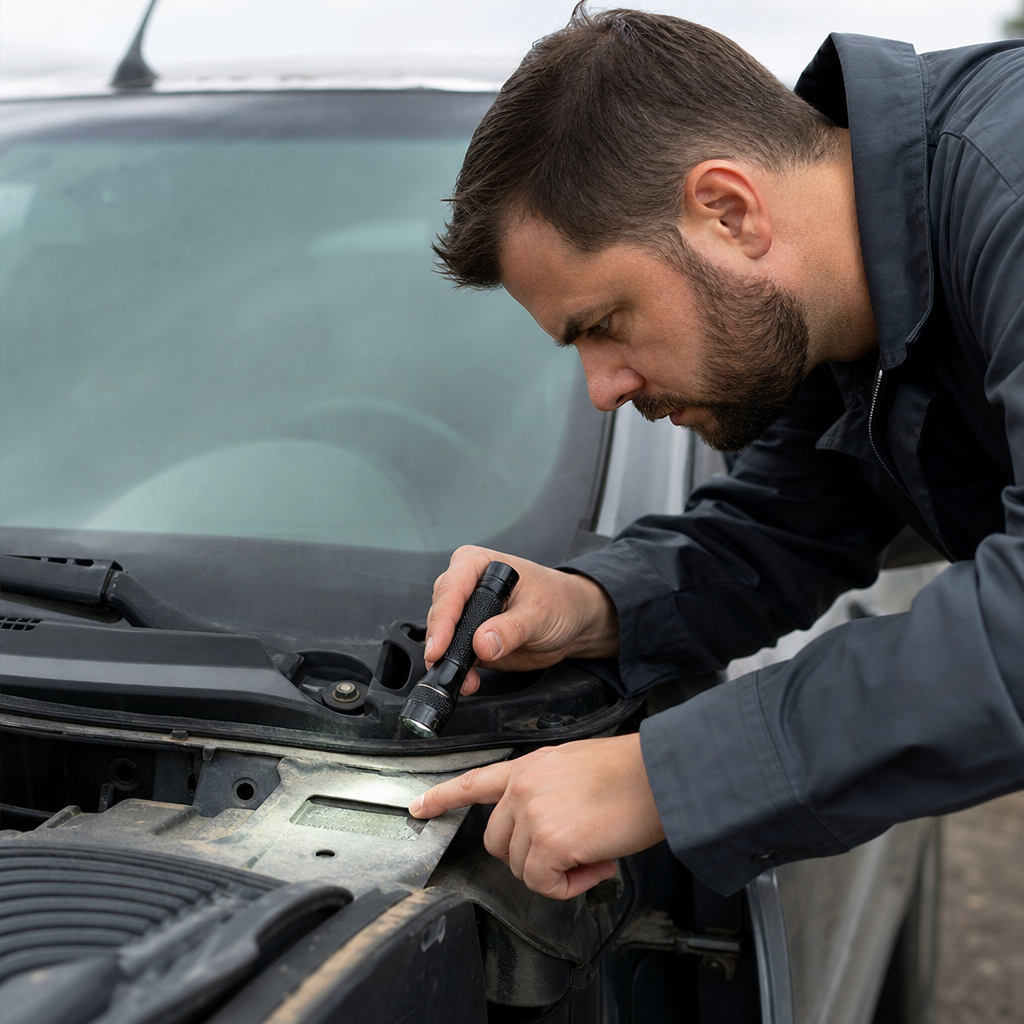
A fake VIN number is a cloned, altered, or entirely fabricated vehicle identification number used to disguise a car’s true identity. Before you buy, compare every VIN location, decode the number, review title history, and verify records through NMVTIS, NICB, and manufacturer data. Catching VIN fraud early can prevent stolen-vehicle seizures, title denial, insurance trouble, and expensive legal headaches.
Fake VIN numbers matter because the VIN is the legal identity of a vehicle. The 17-character vehicle identification number links the car, truck, RV, motorcycle, or trailer to its title, registration, recalls, theft records, and brand history. If that number is wrong, nothing downstream works correctly. In my work with title and retitling problems, VIN issues are often the hidden reason a buyer cannot register a vehicle, cannot transfer ownership, or gets flagged during inspection.
VIN fraud usually appears in three forms. First, VIN cloning uses a legitimate VIN copied from a similar vehicle, often one that is legally registered somewhere else. Second, VIN tampering involves altering a plate, sticker, rivet, or stamped chassis number to hide theft, salvage branding, or export history. Third, a fake VIN can be attached to paperwork that does not belong to the vehicle at all. Buyers searching for a deal on an imported car, classic vehicle, trailer, or off-market luxury vehicle face the highest risk because paperwork may already be thin.
This matters financially and legally. A vehicle with a fake VIN can be impounded as stolen property even if you bought it in good faith. Your state DMV may deny title, insurers may reject coverage, and a lender will not finance a vehicle with questionable identity. According to the National Insurance Crime Bureau, cloned VINs are commonly used to sell stolen vehicles to unsuspecting buyers, especially through online marketplaces and private-party deals. The safest approach is simple: inspect the VIN like a title specialist would before money changes hands.
What a VIN Is and Why Fraud Works
A modern VIN contains 17 characters standardized under ISO 3779 and used across U.S. titling and registration systems. The first three characters identify the world manufacturer identifier. Characters four through eight describe the vehicle attributes, such as body type, engine, restraint system, or model line. The ninth character is a check digit used to detect invalid combinations. The tenth usually identifies model year, the eleventh identifies the assembly plant, and the final six are the serial number.
Fraud works because many buyers look only at the dashboard VIN visible through the windshield. That is not enough. Manufacturers place VIN information in multiple locations, and thieves know casual buyers rarely compare them. They may swap a dashboard plate, print a counterfeit door label, or alter a frame stamping. If the visible VIN matches the title but not hidden or secondary VIN locations, the vehicle identity is compromised. That mismatch is a serious stop sign, not a minor paperwork issue.
VIN fraud also succeeds when buyers trust a title without checking the data behind it. A clean-looking title can still be tied to a cloned VIN, forged reassignment, or unrelated vehicle. I have seen buyers assume “clean title” means safe purchase, then learn the title record does not match the make, trim, engine, or model year on the car in front of them. The lesson is direct: titles do not verify themselves. The vehicle, paperwork, and databases must all agree.
Common Warning Signs Before You Buy
The easiest way to spot fake VIN numbers is to look for inconsistencies. Start with the windshield VIN plate. It should be securely attached, evenly aligned, and free of scratches, pry marks, glue residue, or nonstandard rivets. Most original VIN plates use manufacturer-specific rosette rivets, not hardware-store fasteners. A loose plate, fresh adhesive, or damaged dashboard material around the plate deserves immediate scrutiny.
Next, inspect the driver door label or certification sticker. Check font style, spacing, barcode quality, spelling, paint code formatting, and whether the label appears too new for the age of the vehicle. Counterfeit labels often use modern printers and wrong materials. On older vehicles, a pristine sticker inside a worn door jamb can be a clue that something was replaced. Also compare the manufacture date on the label with the model year shown on the title and the decoded VIN.
Watch for physical signs of rebodying or part swapping. Uneven paint near stamped VIN areas, disturbed welds, mismatched trim, missing federal safety labels, or evidence of dashboard replacement can all indicate identity manipulation. On trucks, trailers, motorcycles, and RVs, inspect the frame and manufacturer plate carefully. Imported and gray-market vehicles deserve extra caution because federalization paperwork, customs forms, and title records can be incomplete or misused.
| Checkpoint | What to Verify | Why It Matters |
|---|---|---|
| Dashboard VIN | Plate, rivets, spacing, tamper marks | Common target for cloning |
| Door label | Date, barcode, font, adhesive, consistency | Counterfeit labels are common |
| Stamped VIN | Frame, firewall, chassis, engine area | Harder to fake than labels |
| Title and registration | Name, year, make, body type, lien data | Paperwork must match the vehicle |
| Database checks | NMVTIS, NICB, recalls, theft history | Reveals hidden brands and theft flags |
How to Verify a VIN the Right Way
Check every VIN location you can access. Many vehicles have visible and hidden identifiers on the dashboard, door jamb, firewall, frame rail, engine compartment, or under body panels. Service manuals, manufacturer guides, dealer parts departments, and law-enforcement theft references can help identify model-specific VIN locations. If one location differs, stop the transaction until a qualified inspection explains why. There are rare legitimate reasons for replacement labels after repairs, but there must be documentation.
Then decode the VIN using a reputable decoder and compare the output to the actual vehicle. The decoded result should match the manufacturer, model year, body style, engine, and assembly plant. If the VIN decodes to a V6 coupe but the car is presented as a V8 convertible, you may be looking at a clone or paperwork mismatch. NHTSA recall lookup tools can also confirm whether the VIN format is recognized and tied to manufacturer records.
Use NMVTIS-approved providers for title history. NMVTIS, the National Motor Vehicle Title Information System, is the key U.S. anti-fraud database for title brands, state title records, and certain salvage or insurance reporting. It is not the same as a marketing report. Also run the NICB VINCheck tool to look for theft and total-loss records. If a seller refuses to let you run these checks or pushes for immediate payment, walk away. Honest sellers expect verification.
For high-value purchases, pay for an independent pre-purchase inspection and, when appropriate, a law-enforcement or licensed verifier VIN inspection. This is especially important for collector cars, imported vehicles, reconstructed vehicles, and units with missing Manufacturer’s Statement of Origin documents. A specialist can detect altered spot welds, swapped tags, and nonoriginal stampings that most buyers will miss in a driveway.
Titles, Retitling, and What Happens If You Miss It
If you buy a vehicle with a fake VIN, your problem usually shows up when you try to title or register it. The DMV may reject the application because the VIN fails checksum validation, does not match prior state records, or is flagged in NMVTIS. In more serious cases, law enforcement may seize the vehicle during a theft investigation. Good-faith purchase does not clean up a stolen vehicle’s legal identity. That is why buyers need answers before purchase, not after.
Retitling a questionable vehicle is difficult and sometimes impossible. A bonded title may help when ownership evidence is incomplete, but a bonded title is not a cure for VIN fraud. If the underlying identity is false, bonding does not create lawful ownership. State agencies may require a physical VIN inspection, theft examination, correction of prior paperwork, lien releases, probate documents, or court orders. If someone died and the vehicle is not in your name, you are not getting a title without the right estate documents and a clean vehicle identity.
This is where experienced title specialists matter. Reviewed by Legal Tags registration specialists, the plain answer is that complex retitling cases need a strategy, not guesswork. Whether the issue involves a missing title, dead owner transfer, lien from an out-of-business lender, or an imported vehicle with inconsistent records, the first step is always identity verification. Once the VIN is confirmed as legitimate, options such as bonded title work, estate transfer support, or lawful Montana LLC method registration may be available depending on the facts.
Best Practices for Safe Buying
Buy from sellers who can explain the vehicle history clearly and provide matching title, registration, bill of sale, ID, lien release, and service records. Meet in daylight, inspect the vehicle in person, and compare every number before sending funds. Be cautious with vehicles priced far below market, rushed shipping arrangements, duplicate listings, and sellers who say the title is “coming later.” Those patterns appear again and again in fraud cases.
Older vehicles require extra patience. Pre-1981 VINs are not standardized to 17 characters, so verification can be more manual. Classic cars, barn finds, homemade trailers, and vintage motorcycles often have missing paperwork or hard-to-find serial locations. That does not automatically mean fraud, but it does mean you should verify state-specific title rules, ask for prior registrations, and confirm whether a bonded title or inspection will be required before purchase. Form numbers and fees change, so verify directly with the relevant state DMV or MVD.
The best protection is simple discipline: inspect, decode, compare, and verify. A few checks before purchase can save months of title problems, registration denials, and expensive losses. If anything about the VIN, title, or seller story does not line up, stop and get professional help. When you need plain answers on VIN problems, retitling, or how to skip the DMV line legally, contact Legal Tags before you buy the wrong vehicle.
Frequently Asked Questions
What is a fake VIN number, and how does VIN fraud usually happen?
A fake VIN number is a vehicle identification number that has been cloned, altered, swapped, or completely fabricated to hide a vehicle’s true identity. Because the VIN is the legal fingerprint of a car, truck, or SUV, changing it can make a stolen vehicle appear legitimate, disguise a salvage or rebuilt history, cover up flood damage, or help a seller pass off one vehicle as another with a cleaner title record. In many cases, fraud involves “VIN cloning,” where criminals copy a valid VIN from a similar make and model and place it on a different vehicle. In other situations, the VIN plate, dashboard tag, door sticker, or stamped chassis number may be tampered with so the vehicle’s records no longer match its actual history.
This matters because the VIN connects everything tied to the car: title records, registration, theft reports, recalls, insurance files, accident history, manufacturer specifications, and ownership transfers. If that number is false, every document attached to the sale may also be misleading. Buyers who unknowingly purchase a vehicle with VIN fraud can face serious consequences, including losing the car if law enforcement determines it was stolen, being denied a valid title, running into insurance coverage problems, or spending thousands trying to correct paperwork and prove ownership. That is why understanding how fake VINs work is the first step in avoiding a costly mistake.
What are the most common warning signs that a VIN may be fake or altered?
One of the biggest red flags is inconsistency. The VIN shown on the dashboard should match the VIN on the driver-side door label, title, registration, insurance card, service records, and any manufacturer documentation. If even one location is different, missing, partially unreadable, or looks replaced, stop and investigate before moving forward. A legitimate vehicle should not have mismatched VINs across its major identification points. You should also look closely at the physical appearance of VIN labels and plates. Signs of tampering can include scratched rivets, uneven spacing, mismatched fonts, crooked placement, glue residue, damaged paint around the VIN area, a label that looks newer than the surrounding surfaces, or a dashboard plate that appears to have been removed and reattached.
Other warning signs can show up in the paperwork and the seller’s behavior. Be cautious if the seller refuses to let you inspect all VIN locations, pressures you to buy quickly, cannot explain title gaps, offers a deal that seems far below market value, or insists on cash-only without allowing a pre-purchase inspection. A vehicle history report that shows impossible mileage changes, conflicting state records, title brands that seem inconsistent with the car’s condition, or registration activity that does not line up with the seller’s story should also raise concern. Even smaller details matter. If the VIN decodes to a different engine, trim, body style, model year, or assembly plant than the vehicle in front of you, that is a serious clue that something is wrong and should be verified before any money changes hands.
Where should I check the VIN on a vehicle before buying it?
Start with the easiest visible location: the VIN plate at the base of the windshield on the driver’s side dashboard. This is usually the first number buyers compare because it can be seen from outside the car. Next, check the driver-side door jamb label or sticker, which often includes the VIN along with manufacturing information such as tire specifications and build date. Then compare both of those numbers to the title, registration, insurance documents, emissions paperwork, maintenance invoices, and any online listings or sales paperwork provided by the seller. Every version should match exactly, character for character.
It is also wise to check additional VIN stampings or labels on major vehicle components when possible. Depending on the manufacturer, the VIN or partial VIN may appear on the engine block, frame, firewall, trunk area, under the hood, inside body panels, or other factory-marked locations. Some vehicles also have manufacturer anti-theft labels on body panels, doors, fenders, and bumpers. If these secondary locations are missing or show inconsistent numbers, that can indicate a parts swap, major reconstruction, or identity fraud. Because VIN placement varies by make and model, a dealer service department, manufacturer resources, or a professional inspector can help identify all factory VIN locations. The goal is simple: confirm that the vehicle’s legal identity is consistent everywhere it is supposed to be.
How can I verify a VIN using NMVTIS, NICB, and manufacturer records?
Begin by decoding the 17-character VIN to confirm that its structure makes sense for the vehicle you are considering. The VIN should align with the correct manufacturer, model year, body type, engine family, and plant of assembly. If the decoded information does not match the vehicle’s actual features, that alone is enough reason to pause. After that, run the VIN through the National Motor Vehicle Title Information System, or NMVTIS, using an approved provider. NMVTIS can help you verify title history, odometer readings, and whether the vehicle has been reported as salvage, junk, or otherwise branded. It is one of the most important tools available to consumers because it draws from state motor vehicle agencies, insurance carriers, and salvage sources.
You should also use the NICB VINCheck tool to see whether the vehicle has been reported stolen or declared a total loss by participating insurers. This is especially useful because a cloned VIN may sometimes carry paperwork that looks clean while the underlying vehicle is tied to theft activity. Then contact the manufacturer or an authorized dealer to confirm details associated with the VIN, such as original equipment, recall information, and sometimes warranty or build data. If the manufacturer’s information does not match the car’s trim, color, engine, or configuration, ask why. No single database is perfect on its own, so the safest approach is layered verification: compare physical VIN locations, decode the number, check NMVTIS, review NICB, inspect title documents, and verify manufacturer data. When all of those sources agree, you have a much stronger basis for trusting the vehicle’s identity.
What should I do if I suspect VIN fraud before completing the purchase?
If you suspect VIN fraud, do not buy the vehicle until every issue is resolved. That means no deposit, no bill of sale, and no verbal promises that the seller will “fix the title later.” Ask the seller for a clear explanation of any mismatch or irregularity and request original ownership documents, not just photocopies or screenshots. If the explanation is vague, defensive, or inconsistent, walk away. It is also a smart move to arrange a pre-purchase inspection with a trusted mechanic, dealership service department, or vehicle fraud specialist who can check hidden VIN locations and look for signs of plate swaps, panel replacement, and structural tampering. Spending a little on inspection can save you from a far larger financial and legal problem.
If the evidence strongly suggests the VIN is fake, cloned, or altered, report your concerns to the appropriate authorities. Depending on the situation, that may include your state motor vehicle agency, local law enforcement, the National Insurance Crime Bureau, or the dealership platform or marketplace where the car was listed. Keep copies of the ad, seller messages, photos of the VIN locations, and any records you pulled during your research. Documentation can be extremely important if the vehicle turns out to be stolen or if authorities open a fraud investigation. Most importantly, trust the red flags. A questionable VIN can lead to stolen-vehicle seizure, title denial, insurance complications, resale problems, and expensive legal headaches. Walking away from a suspicious deal is often the smartest and cheapest decision you can make.